
India's import of cheap Russian oil scaled another record in May and is now more than the combined oil bought from Saudi Arabia, Iraq, UAE and the US, industry data showed. India took 1.96 million barrels a day from Russia in May, 15 per cent more than the previous high in April, according to data from energy cargo tracker Vortexa. Russia now makes up for nearly 42 per cent of all crude oil India imported in May.

India's dependence on imported crude oil to meet domestic demand has been a matter of concern for years. Delivering the inaugural address at the global energy summit - Urja Sangam - in 2015, Prime Minister Narendra Modi had called for enhancing domestic oil and gas production to cut the import burden. He aimed at lowering it by at least 10 per cent by 2022 - to coincide with the platinum jubilee of India's independence. But this target is far from being achieved and the country's import reliance has only risen.
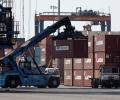
The commerce ministry on Friday held consultations with key stakeholders, including shipping lines, exporters, container firms, and other departments, to assess the impact of the Iran-Israel conflict on India's overseas trade, an official said. The meeting was chaired by Commerce Secretary Sunil Barthwal.
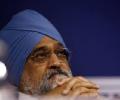
Planning Commission Deputy Chairman Montek Singh Ahluwalia on Wednesday expressed concerns over rising crude prices which soared to two-year high of $ 102 a barrel in Asian markets.

India is 80 per cent import dependent to meet its oil needs.

The government will cut petrol and diesel prices when there is a sustained drop in global crude oil prices, Petroleum Minister Murli Deora said on Thursday.
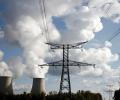
India's brittle energy security is inextricably linked to two opposing paradigms - fossil fuels, and the transition to green energy. The first powers the present; the second paves the way for Viksit Bharat in 2047.
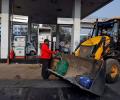
Diesel price on Friday was hiked by 20 paise per litre - the first increase in rates in over two months - as international oil prices neared their highest since 2018. Price of diesel was hiked to Rs 88.82 per litre in Delhi and to Rs 96.41 in Mumbai, according to a price notification of state-owned fuel retailers. Petrol price was not changed. It costs Rs 101.19 a litre in Delhi and Rs 107.26 in Mumbai.
Rather than complaining about the rise in petrol prices, Aditya Prasad suggests some really simple steps to deal with it.
While stable raw materials prices have spelt relief for most FMCG companies, they are still having a tough time in defining the future pricing strategy. Most have indicated that input costs have hit their margins, while others maintained that if inflation continued unabated, there would be a further correction in prices. Many FMCG companies have either raised prices or reduced the size of their products to combat the rise in farm commodity prices and packaging costs.

The outgo for major subsides, is the highest in the first quarter.

The RBI's policy decision would be the major event driving trading sentiment in the equity market this week, while global cues, foreign funds movement and crude oil prices will be the other key factors to watch out for, analysts said. Markets have been witnessing a rebound recently. However, the move lacks decisiveness amid lingering challenges like global policy tightening due to soaring inflation and geopolitical tensions, they added. "RBI policy, global macro numbers and crude oil prices will set the trend for this week.
India to urge OPEC to hike oil production
A price reduction may be considered if crude oil falls to $61 per barrel, he said. The basket of crude oil India buys was at this year's lowest of $68.81 per barrel. Indian Oil, Bharat Petroleum and Hindustan Petroleum are currently losing about Rs 280 crore (Rs 2.8 billion) per day on sale of petrol, diesel, domestic LPG and kerosene as government has not allowed them to align retail prices with cost of production.

Upstream firms pay for a portion of fuel subsidies by extending discounts on crude oil they sell to refiners who are forced by the government to sell diesel and cooking fuel at rates lower than cost of production.
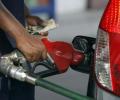
Petrol and diesel prices, which have been on a freeze for the past four months in view of assembly elections in states like Uttar Pradesh, need to be increased by over Rs 12 per litre by March 16 for fuel retailers to break even. International crude oil prices shot above $120 a barrel for the first time in nine years on Thursday before retreating a little to $111 on Friday, but the gulf between cost and retail rates has only widened. With international oil prices - on which domestic fuel retails are directly benchmarked - spiking in the last two months, state-owned fuel retailers "need a massive price hike of Rs 12.1 per litre on or before March 16, 2022, just to breakeven and a price hike of Rs 15.1 is required" after including margins for oil firms, ICICI Securities said in a report.

Lower crude prices mean less government outlay for India,
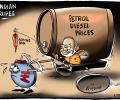
Despite a massive decline in crude oil prices since 2012 -- Modi has been prime minister in six of these eight years -- petrol in Delhi has become 10 per cent costlier and diesel 97 per cent, as of July 2.
Government earlier this month cut petrol price by Rs 5 a litre and diesel by Rs 2 per litre as crude oil prices dipped from an all-time high of $147 a barrel in July to under $45 a barrel. Even after the price cut, public sector oil firms were making a profit of Rs 9.98 on sale of every litre of petrol and Rs 1.03 per litre on diesel.

From the Sensex pack, Eternal, Bharat Electronics Ltd, Trent, Axis Bank, State Bank of India, Bajaj Finance, Sun Pharmaceuticals, Asian Paints, Adani Ports, Hindustan Unilever, Reliance Industries, ITC, PowerGrid, Tata Motors Ltd's Commercial Vehicles business, and Bajaj Finserv were the gainers. Infosys, Tata Motors Passenger Vehicles, Tata Steel, ICICI Bank, Tech Mahindra, Titan, UltraTech Cement, Maruti Suzuki India, and Larsen & Toubro were the laggards.

Among Sensex firms, Mahindra & Mahindra, Tech Mahindra, State Bank of India, Infosys, Adani Ports and ITC were the major gainers. However, Eternal, Sun Pharma, Tata Steel, Tata Motors, Bajaj Finance and Bharat Electronics were among the major laggards.

From the Sensex basket, Larsen & Toubro, Bajaj Finance, Axis Bank, State Bank of India, UltraTech Cement, Wipro, ICICI Bank, Infosys, HCL Technologies and Asian Paints were the major gainers. NTPC, JSW Steel and HDFC Bank were the laggards.

Only Hindustan Unilever and Nestl bucked the trend.
Lower crude oil prices are expected to bring down jet fuel rates by 10 per cent in September, but passengers are unlikely to get the benefit as airlines are reluctant to reduce their fares.
Research and ratings agencies like Icra and Moody's have said the CAD in 2018-19 would be much higher than 2017-18

Macroeconomic data announcements, global trends and trading activity of foreign investors would be the major driving factors for the equity markets this week, according to analysts.

'India is cosying up to Xi Jinping. They don't need the Russian oil. It's a refining profiteering scheme.'

Every 10 per cent rise in crude oil price will shave off around 0.2 percentage point (pp) from India's GDP growth and widen the current account by 0.3 per cent, says Nomura.
Oil prices fell after the US Senate rejected a $14bn bail-out plan for the carmakers' sector, a move that weighed heavily on sentiment towards commodities.
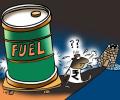
A realistic approach towards tax and stock taking is necessary, rather than the old narrative of bringing all petroleum products under GST and playing the blame-the-state game.
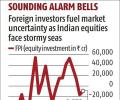
Foreign portfolio investors (FPIs) have withdrawn Rs 25,305 crore from domestic markets since September. FPIs were net sellers in the first two months of 2023, but from March to August, they purchased equities worth Rs 1.7 trillion. This selling trend has caused the National Stock Exchange Nifty Index to decline by 3.2 per cent from its September highs. FPI selling initially began in September as profit-taking but intensified due to rising US bond yields and uncertainty regarding the rate hike trajectory.
Deregulating petrol and diesel prices has been on the cards since the crude oil prices came down by $100 from the historic high of $147 a barrel, a few weeks back. But with the rates climbing again, doubts are being cast if prices can actually be freed. Crude oil prices are ruling at $71-72 a barrel, a seven-month high.
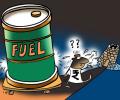
Low oil prices drove the growth in states' share faster than expected, says Abhishek Waghmare.

The Iran-Israel conflict has further increased global economic uncertainties, impacting world trade, including India's exports, as it is expected to drive up both air and sea freight rates, exporters say. They said that India's exports to Europe and counters like Russia may get impacted due to this war.
The price of the Indian basket of crude oil touched an all-time high of $75.30 per barrel on Thursday, the latest day for which data are available, sending alarm bells ringing in the government.
With volatile international oil prices costing the country $43 billion in import bill, energy-hungry India has called for forging enduring partnerships between oil producing and consuming countries to contain the effect of surging oil prices.
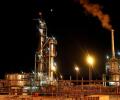
India's import of discounted crude oil from the Russian Federation hit an all-time high in May, with state-run refiner IOC becoming the biggest importer of Russian oil, relegating Reliance Industries to the second place, trade and shipping data show. Indian imports of Russian oil, accounting for over 46 per cent of its total crude oil imports in May, have grown after strong backing by New Delhi, with state-run refiners powering imports of discounted crude. Discounts on Russian oil average around $10 a barrel, said an official from a state-run refiner. IOC's May purchases rose by 64 per cent on the month, and accounted for half of its total crude imports last month, ship tracking data show.
India, which imports over 80 per cent of its oil needs, spent $87.7 billion on importing 220.43 million tonne (MT) of crude oil in 2017-18. For 2018-19, the imports are pegged at almost 227 MT.
International crude prices, which rose to a historic high of over $147 a barrel in July last year, have slumped to four-year low of around $37 per barrel, prompting fears that companies may not invest in new fields. Several oil companies have put on hold investments in small and marginal fields and in difficult and frontier areas following the sharp dip in prices as current rates give a negative rate of return on the huge investments required.

Expecting oil prices to remain under pressure, Fitch Ratings said deregulation of diesel prices in October will help in lowering the under-recoveries (which is nothing but international petroleum prices minus the subsidised retail rates).
 © 2026 Rediff.com - Advertise with us - Disclaimer - Privacy Policy - Sitemap - Feedback - About us - Terms of use - Grievances